
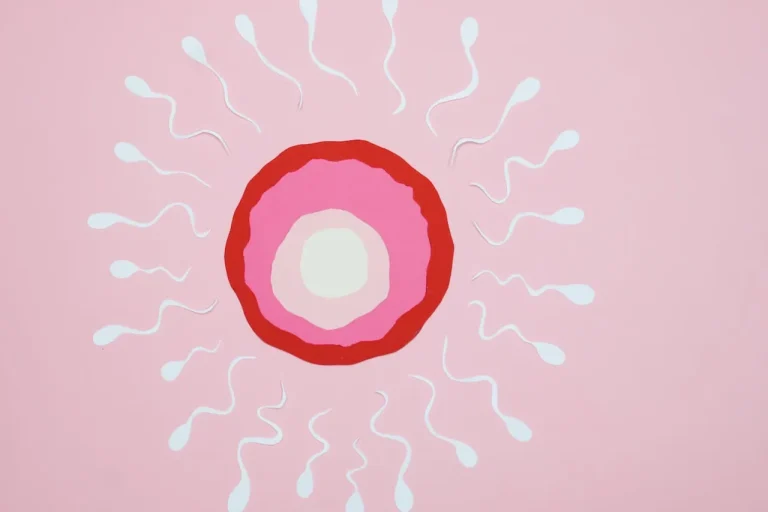
The journey to conceiving a healthy baby can be filled with ups and downs, especially when considering the nuances of egg quality after 35. However, in my nearly 30-year-long career as a scientist and fertility expert, I’ve had the incredible opportunity of discovering new, groundbreaking truths about pregnancy over 35 and helping women from ages 28 – 47 have their healthy superbabies.
Age significantly impacts female reproductive capacity and viability, with diminishing egg reserves, quality, and health. This decline heightens drastically when we near our 40s. We also know this isn’t concrete or set in stone thanks to the research and scientific evidence of our ability to make positive epigenetic changes, facilitating your healthiest pregnancy, baby, and future long life. Today, we’ll explore the vital process of egg maturation, how egg quality is influenced, and how to sway that influence positively to effect the needed epigenetic changes. Are you ready to dive in with me?
Improving Egg Quality After 35 & Understanding Egg Maturation
It’s awe-inspiring to consider that the blueprint for your future offspring and even your grandchildren was intricately woven into the fabric of your existence long before you took your first breath. Your reproductive system developed when you were a 20-week-old fetus, complete with eggs that will become your baby when the time comes. When we consider the concept of carrying future generations within us, it’s a testament to the profound interconnectedness of life, which speaks volumes about the intergenerational transmission of health.
Oogenesis, the process of egg development in females, commences even before birth and spans a lifetime. It’s an intricate sequence involving various stages, each pivotal in shaping the potential for future life. The significance of egg quality cannot be overstated. It encompasses an egg’s genetic and structural integrity, determining its ability to be fertilized and develop into a healthy embryo. As age progresses, the risk of chromosomal abnormalities rises, impacting the success of conception (Owen & Sparzak, 2022). Understanding these aspects is crucial if you’re trying to improve your egg quality after 35.
Before diving into the maturation process, I want to tell you about how you can actively improve your egg quality after 35 and protect your body, pregnancy, and baby from age-related conditions that can make the idea of conception after 35 seem far-fetched. Prime Vitamin D with K1 and K2 significantly boosts egg quality through its diverse advantages. Acting as a hormone, Prime Vitamin D with K1 and K2 directly influences follicle and egg development, which is crucial for fertility. Low Vitamin D levels correlate with fertility issues, while optimal levels reduce risks of preterm birth, thanks to immune and calcium regulation (Meng et al., 2023). Higher maternal Vitamin D during pregnancy benefits children’s health by lowering autoimmune risks like multiple sclerosis. With essential vitamins K1 and K2 supporting bone health and preventing deficiencies during pregnancy, this supplement safely enhances fertility and egg quality.
Get Prime Vitamin D with K1 and K2 today.
The Egg Maturation Process
Primordial Follicles Formation:
During early fetal development, the ovaries house primordial germ cells, which are the precursors to eggs. These cells go through several divisions and start forming clusters of cells called primordial follicles (Wear et al., 2016). Each of these follicles contains an immature egg cell, or oocyte, in a dormant state.
Primary Follicle Development:
Some of these primordial follicles are activated as a female progresses through childhood into puberty. The activated follicles undergo a transformation into primary follicles (Williams & Erickson, 2000). The oocyte within the primary follicle grows and is now surrounded by layers of specialized cells called granulosa cells. These cells provide nourishment and support to the developing egg.
Secondary Follicle Formation:
Inside the primary follicle, a fluid-filled cavity begins to form, creating a structure known as a secondary follicle. This cavity called an antrum, continues to expand, and the granulosa cells divide into two distinct layers: the inner cumulus oophorus, which encases the egg, and the outer theca cells, providing hormonal support.
Graafian Follicle Maturation:
Among the secondary follicles, one becomes dominant due to hormonal signals. This dominant follicle matures into what’s known as the Graafian follicle. The oocyte within this follicle undergoes final maturation, acquiring the ability to be released during ovulation.
Ovulation:
Hormonal surges, particularly luteinizing hormone (LH), trigger the Graafian follicle to rupture, releasing the matured egg from the ovary. This process is ovulation and typically occurs around the middle of the menstrual cycle (NHS, 2018).
Fate of the Egg:
The egg travels down the fallopian tube upon release. If fertilization occurs during this journey by a sperm cell, it forms a zygote, marking the beginning of a new life. If not fertilized within a certain timeframe, the egg disintegrates, and the menstrual cycle continues.
This intricate process, spanning decades and involving precise hormonal regulation and cellular interactions, showcases the meticulous orchestration required to create and release a single egg. It’s an exquisite illustration of the complexity and beauty inherent in the creation of life, showcasing the marvels of human reproduction.
To help nurture your developing superbaby, I’d like to introduce you to Prime GlycerophosphoCHOLINE. It is a pivotal asset for fertility, pregnancy, and beyond. It fosters cell growth and fetal brain development as a crucial cellular membrane component. Its supplementation during pregnancy lowers the risk of attention issues and enhances children’s social engagement.
Beyond brain health, it supports liver function, aids fertility in both men and women and assists in absorbing fat-soluble nutrients. This supplement offers holistic support for brain, gut, and cardiovascular health, making it integral for comprehensive fertility and pregnancy care, especially in improving egg quality after 35.